Marshel Display Font for Handmade Creators
If you’ve ever spent twenty minutes scrolling through font libraries just to find that one perfect typeface for your candle label—or agonized over whether a script font will cut cleanly on your Cricut—then you’ll appreciate Marshel. It’s not another overly ornate display font that looks amazing on screen but falls apart at 12pt or fails to kern properly on a sticker. Marshel is thoughtfully designed, visually confident, and built for real-world making.
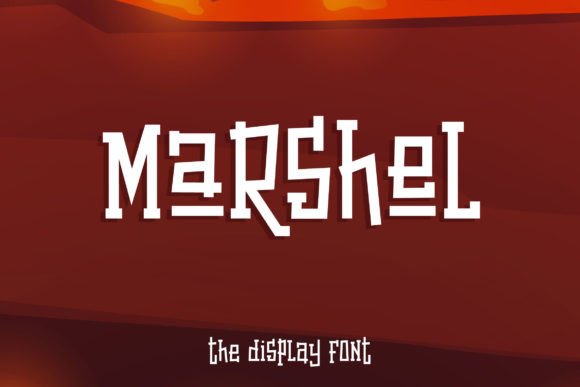
Visually, Marshel walks a graceful line between modern and approachable. It has subtle rounded terminals, gentle contrast in stroke weight, and open letterforms that breathe well—even at small sizes. There’s no excessive flourish or forced quirkiness. Instead, it delivers quiet confidence: friendly enough for a baby shower invitation, bold enough for a farmhouse-style wall sign, refined enough for boutique soap packaging. It reads as contemporary without chasing trends, and timeless without feeling dated.
Where Marshel Shines in Physical & Digital Craft Projects
As someone who designs printable planners, cuts vinyl decals, prints greeting cards, and hand-presses tags onto ceramic mugs, I test fonts across *real* production conditions—not just mockups. Here’s where Marshel consistently delivers:
- Candle and product labels: Its clean x-height and generous spacing mean it remains legible even when scaled down to 8–10pt on 1.5" round stickers. No squinting, no mis-cut letters.
- Wedding stationery: Use Marshel for “Mr. & Mrs.” on welcome signs or monogrammed napkin wraps—it adds warmth without competing with delicate floral motifs or foil accents.
- Digital printables: Whether it’s a minimalist quote poster or a themed planner cover (think “Cozy Autumn” or “Fresh Start”), Marshel holds attention without overwhelming the layout.
- SVG files & cutting machines: The outlines are smooth and consistent—no hairline gaps or overlapping nodes. I’ve used it successfully with Silhouette Studio and Cricut Design Space for layered paper crafts and iron-on transfers.
- Seasonal product packaging: From Easter egg labels to holiday ornament tags, Marshel’s balanced proportions keep messaging clear while adding a touch of handmade charm.
Readability Meets Real-World Production
Let’s be practical: a gorgeous font means little if it doesn’t survive the printer, cutter, or customer’s untrained eye. Marshel was clearly tested beyond the design screen. Letters like a, e, and s have distinct, unambiguous shapes—critical when printing tiny batch numbers or ingredient lists. The uppercase I and lowercase l are differentiated, and the zero includes a dot, reducing confusion on product tags or QR code labels.
For physical products, I recommend using Marshel at 14pt minimum for printed cards and 16pt+ for laser-cut wood signs. On stickers under 2", stick to short phrases (“Hand Poured”, “Small Batch”, “Made With Love”)—it’s a display font, not a body text workhorse, and that’s exactly its strength.
Smart Pairings That Elevate Your Brand Consistency
Marshel plays beautifully with other typefaces—especially when building cohesive brand assets. My go-to pairings:
- With a clean sans serif (like Montserrat or Inter): Use Marshel for headlines and product names, the sans for descriptions, care instructions, or website navigation. This combo reads professional, trustworthy, and quietly elevated.
- With a soft handwritten font: Try Marshel for “Welcome” on a wedding chalkboard, then switch to a relaxed script for guest names. The contrast feels intentional—not chaotic.
- With a classic serif (like Playfair Display or Lora): Great for apothecary-style labels or vintage-inspired booklets. Marshel brings modern clarity; the serif adds texture and tradition.
Avoid pairing Marshel with overly decorative scripts or ultra-thin fonts—they compete rather than complement. Its personality is warm but grounded, so let it lead with presence, not noise.
Licensing, Formats, and What You’ll Actually Get
Marshel comes as a premium font with full commercial licensing—meaning you can use it confidently on products you sell physically (mugs, tote bags, candles) and digitally (printable templates, SVG bundles, Canva-compatible design kits). Just verify your license covers *your specific use case*, especially if you’re bundling fonts into editable templates for resale.
It includes standard OpenType features: multiple ligatures, stylistic alternates, and swashes—ideal for customizing wedding monograms or giving seasonal designs extra flair. File formats typically include OTF and TTF, compatible with Adobe apps, Cricut Design Space, Silhouette Studio, and free tools like Inkscape or DaVinci Resolve for social media graphics.
Multilingual support covers Western European languages (including accented characters for French, Spanish, German), which matters if you sell internationally or create bilingual baby announcements or recipe cards.
Why Marshel Fits Your Creative Workflow—Not Just Your Wishlist
This isn’t a font you download once and forget. It’s become my reliable “first choice” for projects where clarity, craft appeal, and commercial viability all matter. When a customer sees Marshel on your lavender-scented soy candle label, they don’t just read “Relax”—they register care, intention, and quality. That subtle impression builds recognition across your Etsy shop, Instagram posts, and local market booth signage.
And because it’s versatile—not niche—you won’t need five different display fonts to cover your needs. One thoughtful investment in Marshel supports invitations, packaging, digital downloads, and social graphics. It helps unify your brand identity without limiting your creative range.
If you're curating a working font library—not just collecting pretty typefaces—Marshel earns its place. Not as decoration, but as a tool: dependable, expressive, and made for makers who ship real things to real people.